A Visit to the Dallas Holocaust and Human Rights Museum
Some places feel like they have a heartbeat.
Not the comforting, lullaby thrum of home, but the uneasy, echoing pulse of memory refusing to be buried.
The Dallas Holocaust and Human Rights Museum doesn’t live on the usual list of day trips or weekend recommendations. Maybe because it demands more than a passing glance. Maybe because it asks us to stand in rooms built to remember what most would rather forget.
When you walk through the museum’s permanent exhibition, the air seems to thicken. The walls hold stories so heavy they bend time. Photographs of faces—young, old, bright-eyed, bone-weary—gaze back with the same unspoken question: What will you do with the comfort you inherited?
This is not a place you leave unchanged.
It is a place that gently dismantles your illusions of history as something that happened far away, to other people. The museum refuses to let you flatten the past into a single narrative or reduce it to a cautionary tale with a tidy ending. It shows you what happens when humanity forgets its own reflection. It reminds you how quickly the ordinary can twist itself into atrocity—when cruelty becomes a currency and silence becomes complicity.
The Museum doesn’t just tell the story of the Holocaust. It threads the needle into modern human rights issues—genocide, systemic oppression, the quiet violence of prejudice that thrives in apathy. It dares you to look at the world as it is, and to see your own small choices not as trivial, but as part of a larger tapestry.
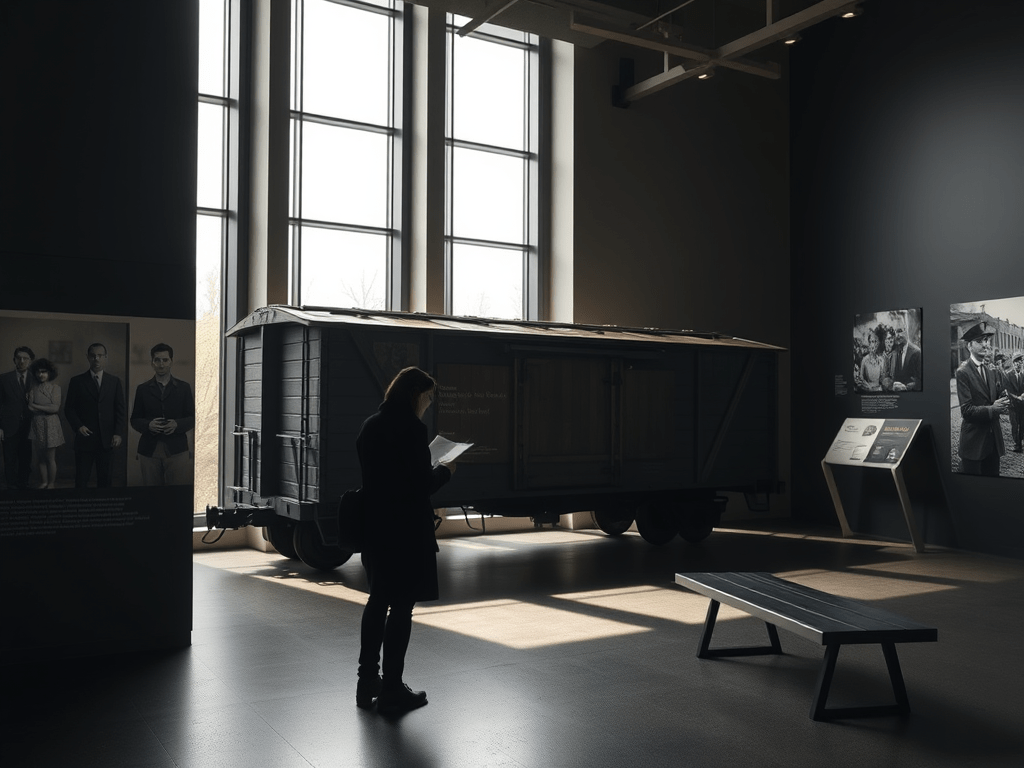
Some rooms will undo you. The boxcar, impossibly cramped. The testimony theater, where survivors’ voices rise from the darkness like prayers. The gallery of contemporary injustice that makes it clear: the past is never just the past.
I’ve always believed that we inherit not only our ancestors’ wounds, but also their unfinished work. Maybe that’s why spaces like this matter—because they are a mirror, reflecting every reason we must not turn away.
If you ever find yourself in Dallas, I hope you will go. I hope you will stand in those rooms and let them change you.
Why It Still Matters:
Because injustice didn’t end with the liberation of the camps.
Because the same dehumanization that fueled the Holocaust shows up today—in xenophobia, in antisemitism, in racism, in the persecution of the LGBTQ+ community.
Because history is not a static monument but a living mirror.
And because every time we look away, we give permission for it to repeat itself.
Because healing, both personal and collective, begins with remembering.
And sometimes, the bravest thing you can do is walk willingly into the rooms we pretend aren’t there—and stay long enough to feel the weight of what they hold.
<3 A.S. Thorne
✨ How to Visit a Place That Will Change You
It’s easy to imagine history as something safely behind glass—a relic we can study without consequence. But the Dallas Holocaust and Human Rights Museum doesn’t allow that illusion. It insists you look closer, feel something, and ask yourself: What am I doing to make sure this never happens again?
Nestled in Dallas’s Historic West End at 300 N. Houston Street, this museum is easy to find and impossible to forget.
Inside, you’ll find the Holocaust Wing with personal artifacts and a restored boxcar;
the Human Rights Wing sharing stories of global genocides and civil rights struggles;
the Dimensions in Testimony Theater where survivors’ holograms answer your questions; and spaces to reflect on the weight of it all.
Open Tuesday through Sunday, 10–5 (closed Mondays), it’s best visited early in the day when it’s quiet enough to truly listen.
This place matters because the same dehumanization that fueled the Holocaust still thrives in modern prejudice and systemic injustice. Every time we look away, we give permission for it to repeat itself.
So visit. Bring someone who’s never been.
Share what you learn.
Speak up when hate hides behind humor or opinion.
Support the work of human rights organizations.
And remember: the line between cruelty and compassion is drawn in everyday choices.
Sometimes, it starts with simply deciding to bear witness.
If you’ve been—or if you plan to go—I’d love to hear your thoughts. Share your experience in the comments below.
 A.S. Thorne
Leave a comment